
Anticipatory Grief and Loving an Aging Pet
Content warning: This post discusses anticipatory grief related to an aging pet and includes reflections on decline and end-of-life decisions. Please take care while reading.
When Grief Begins Before the Loss
Anticipatory grief is the grief we experience before a loss actually occurs. When it comes to aging pets, this kind of grief can feel especially painful and disorienting. Many people find themselves cycling between reassurance that things will be okay for a while, awareness that “the time” is approaching, and moments of deep sadness or bargaining for more time. There is no linear path through this experience.
For some, anticipatory grief begins even before adopting a pet. For others, it emerges the moment subtle changes appear. I have lost four cats to the rainbow bridge, and I know my dog’s time is coming too…though I don’t know when. I’ve cycled between “it could be any day now” to “I think we have at least a few more months”. With my senior cats, anticipatory grief surfaced years before their deaths, when early health changes became noticeable. For a long time, even routine veterinary visits brought overwhelming emotion – my vet was used to me crying at every appointment. Simply being there felt like a reminder of what lay ahead.
A Different Experience of Anticipatory Grief
The anticipatory grief I experience with my dog feels different and more complex. She is the only dog I have ever had, and caring for an aging, 50-plus pound animal brings challenges that are new to me. As often happens with anticipatory grief, I notice the accumulation of small losses: the quiet disappearance of routines, behaviors, and shared moments that once felt permanent.
Some changes happened gradually, others happened rapidly over the past several months. Many were easy to miss at first, yet in hindsight they feel strikingly obvious. This is common in anticipatory grief: awareness often arrives after those smaller changes have already occurred. Then follows the guilt that we just let those “lasts” sneak by.
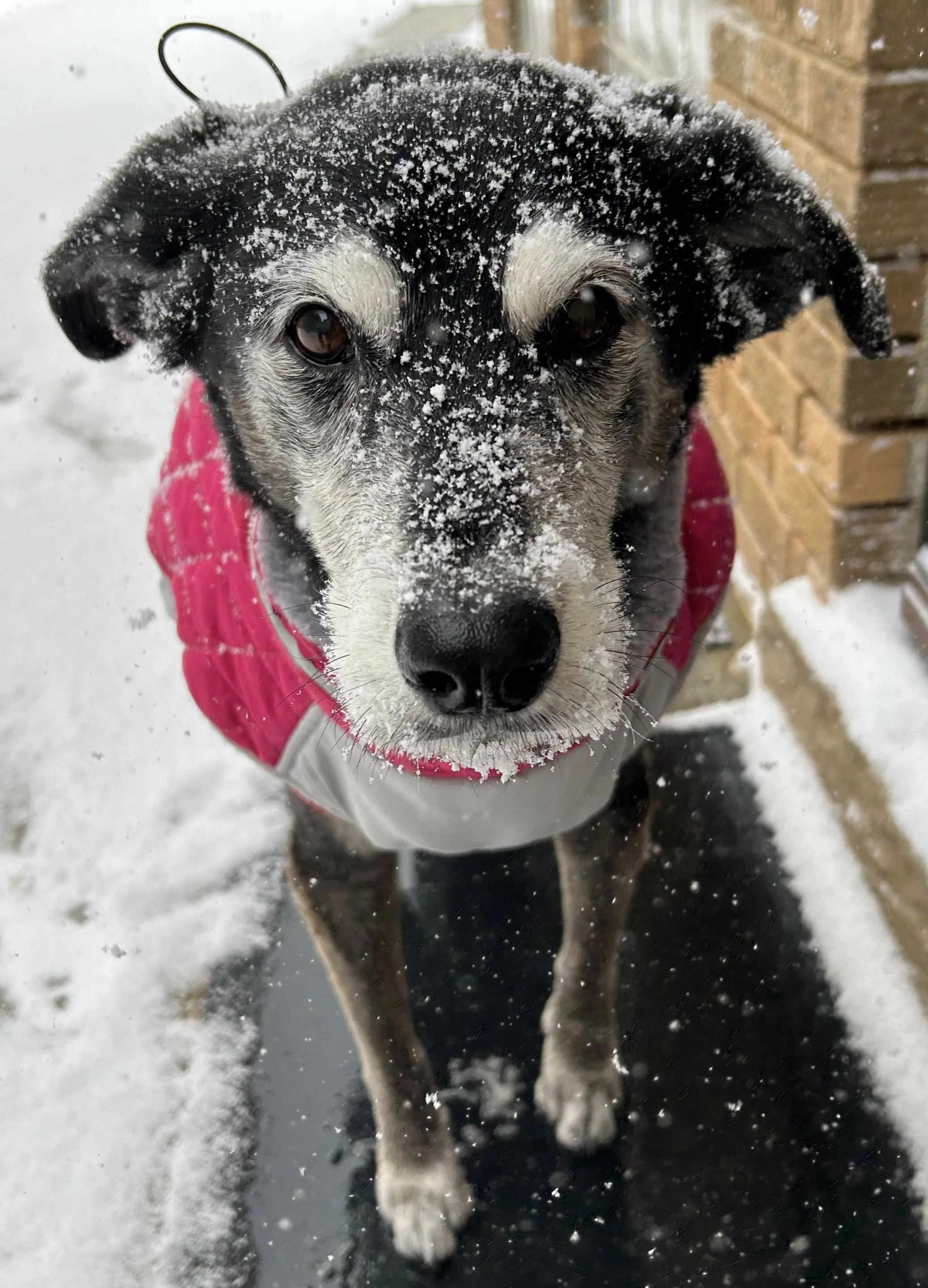
Enjoying a sudden snowstorm
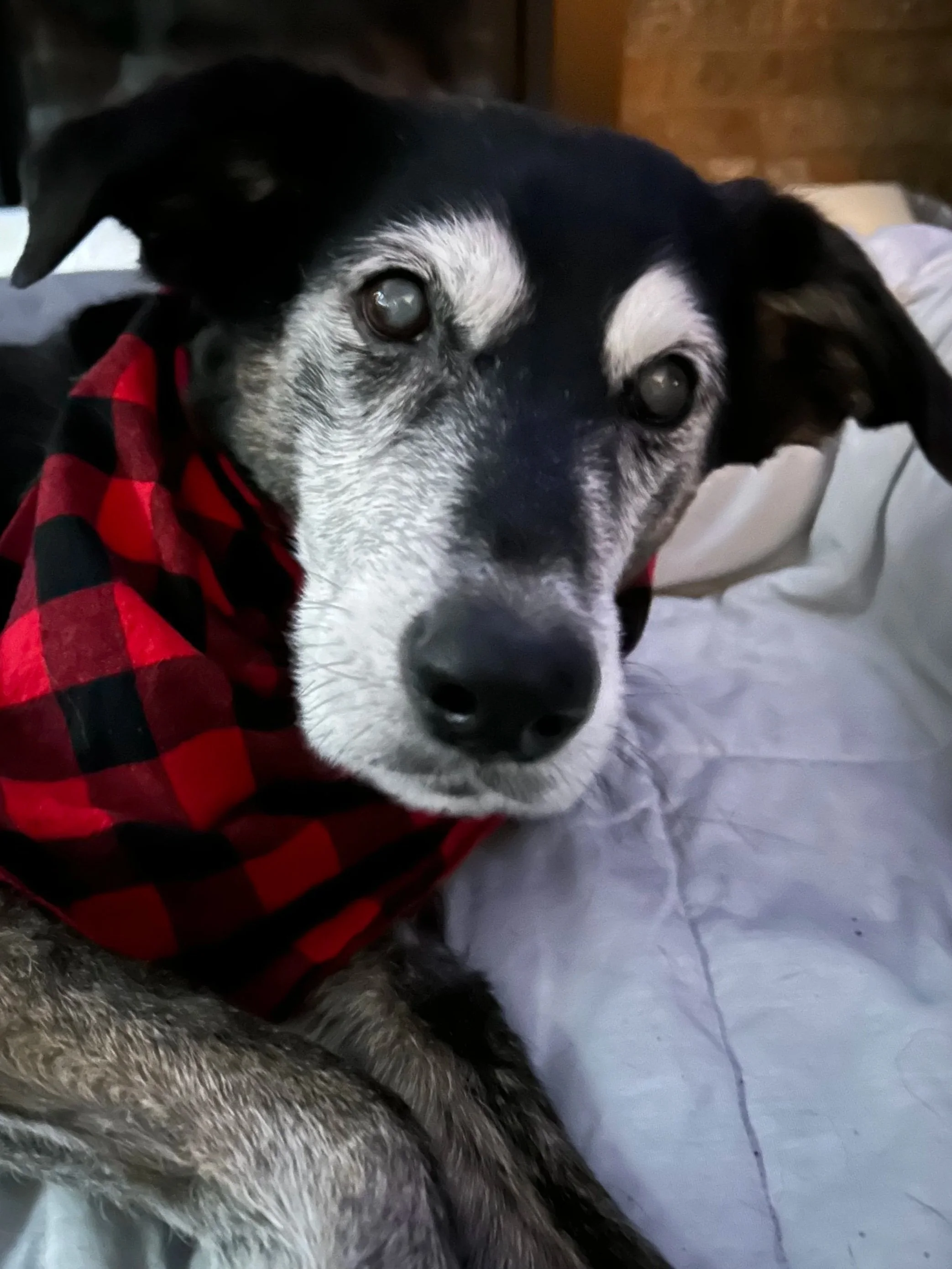
She always has my heart

Just a baby!
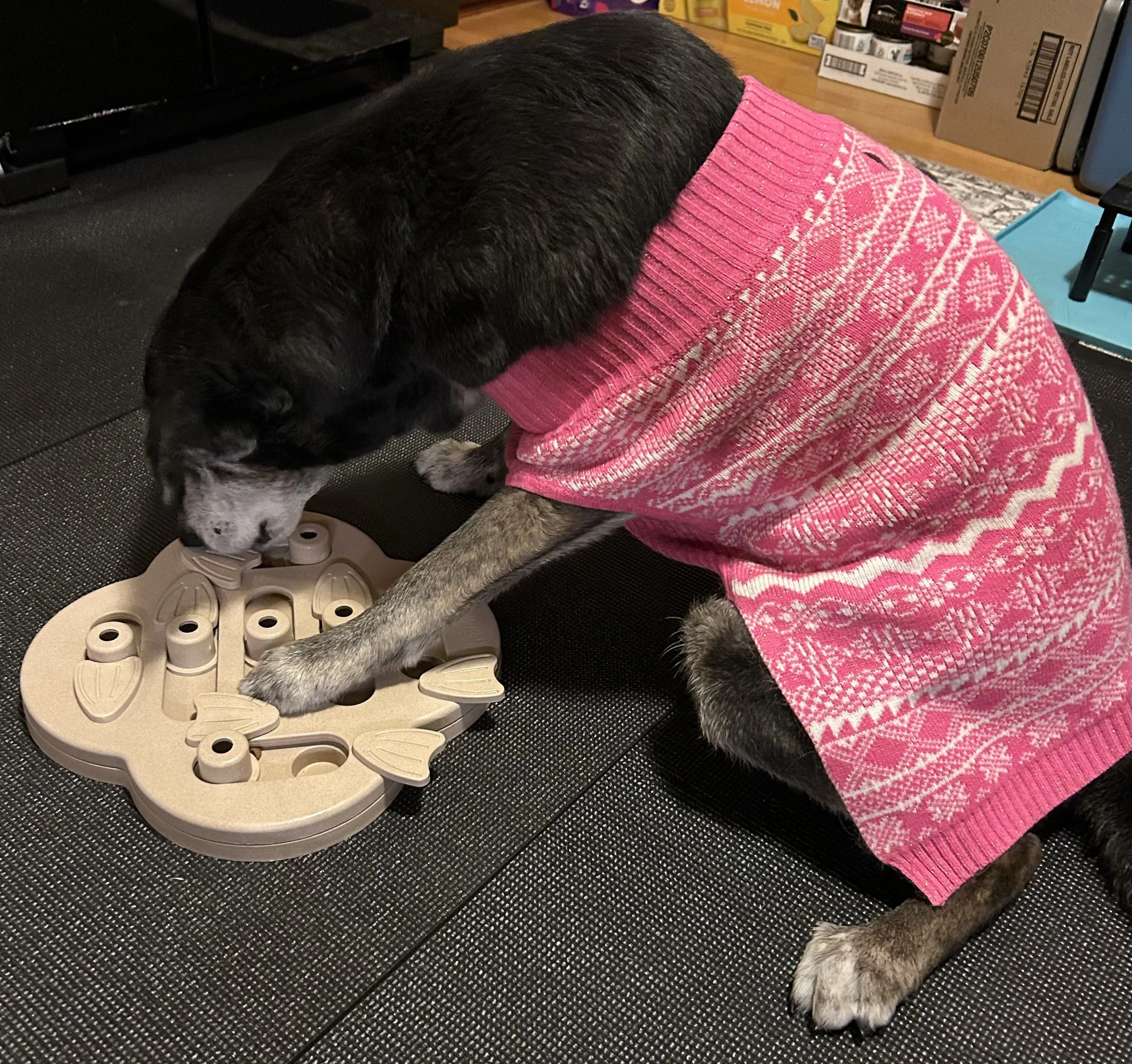
Keeping her brain active with a food puzzle
The Loss of Familiar Comforts
My dog once loved lying beside me on the couch, sleeping on my spot, and napping on my bed. Over time, she stopped climbing onto surfaces where she no longer felt stable and she prefers to stay on the ground. Spaces that once offered comfort and safety no longer feel accessible to her.
She loved warmth from heated blankets and self-warming beds but now avoids them. She stopped sleeping on her longtime bed in December, still trying sometimes but unable to get comfortable. I no longer tuck her in with blankets at night, worried about her getting tangled, falling and panicking. These small adjustments, while necessary, carry their own grief.
When Desire and Ability No Longer Match
Aging often brings a painful mismatch between what a pet wants to do and what their body can manage. My dog still has energy and excitement, but changes in vision, arthritis, neuropathy, and reaction-time make play difficult. Toys and treats she once caught with ease now sometimes bounce off her nose. She may watch a toy get thrown and not chase it, or struggle to engage once she does.
She still wants to run and jump, even when it isn’t safe. Walks, once long and insistent, are now much shorter and weather dependent. I’ve had moments of fearing that we may have already taken our final walk together without knowing it. Anticipatory grief often lives in these unmarked “lasts.”
A World That Grows Smaller
My dog once spent hours lying in the sun, rolling in the grass, resting on the driveway or deck. Now she mostly wanders the yard and sniffs, rarely settling. She no longer goes upstairs to my husband’s office. Her world has become smaller, more contained.
She once had relationships with her cat siblings, now all passed. Though we’ve adopted more cats, her interactions are limited. She just has my husband and me now. She also used to lean against our legs when she wanted affection - what we called her “hugs.” I can’t remember the last time she did that. It breaks my heart.
The Questions Anticipatory Grief Brings
A common question in anticipatory grief is: Do they miss what they’ve lost? I wonder whether she notices these absences. Her continued enthusiasm sometimes sharpens the sadness, because she doesn’t understand her limitations. She tries anyway.
As changes accelerate, questions multiply. Which changes are temporary? Which are medication-related? Which signal progression? For many caregivers, this uncertainty becomes one of the heaviest emotional burdens. The lines between adaptation, acceptance, and giving up can feel impossibly unclear.
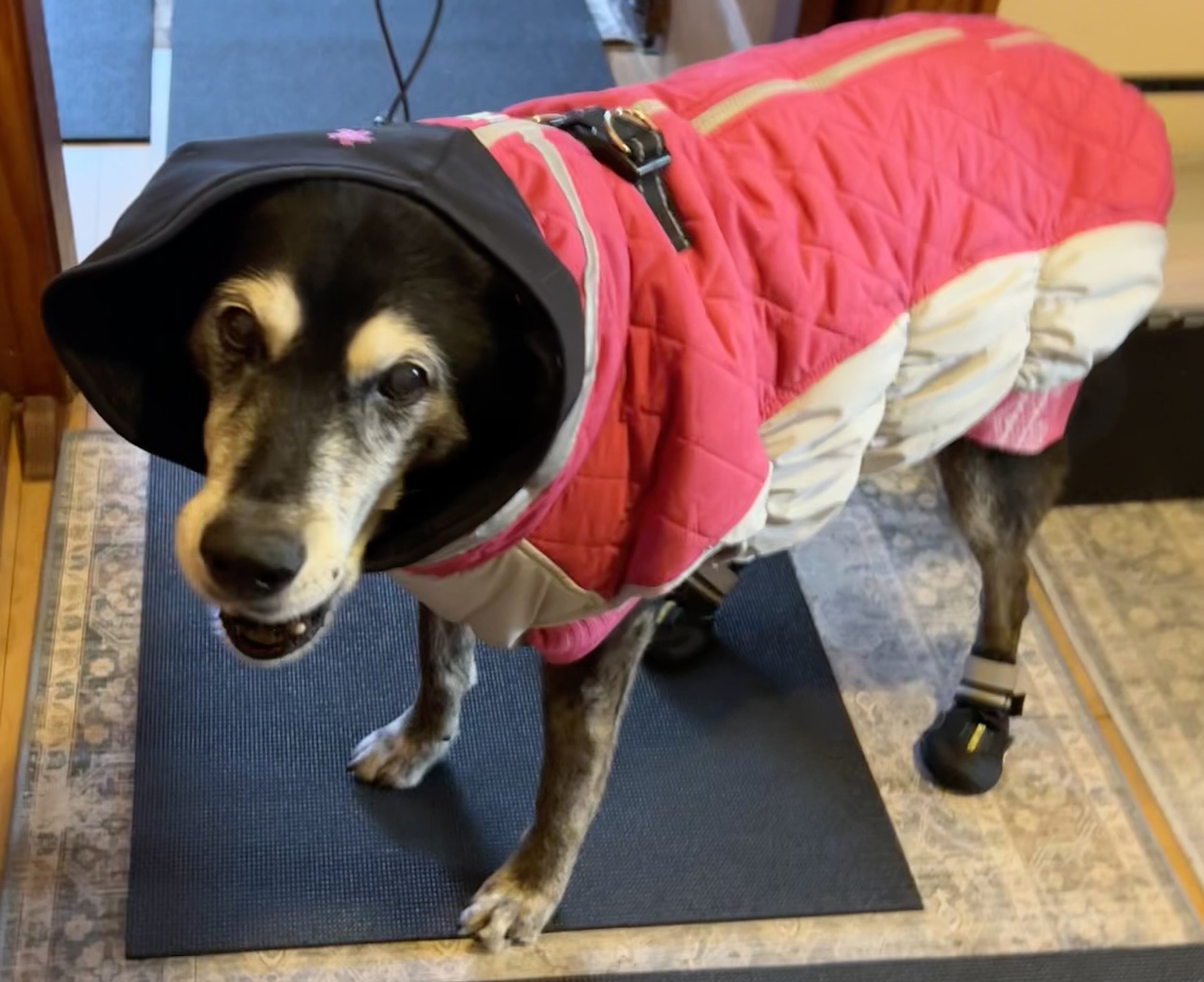
Bundled up for the extreme cold
Holding On to What Remains
A therapeutic approach to anticipatory grief often involves gently widening attention to include what is still present. Despite everything that has changed, my dog still seems to find pleasure and comfort.
She enjoys watching the world from her ottoman by the large sunroom window. She loves her fancy orthopedic bed and the many extra mattresses on the floor. She finds safety in her pop-up kennel when medications leave her disoriented. She relaxes during red-light therapy on her joints. She still follows scent trails through the yard with determination. Walks may be shorter, but she still eagerly anticipates them.
She wags her tail when I pick up a toy and she recently dug into a toy bin again. She lights up when her dad comes home. She greets me each morning with a wagging tail. She still loves sweaters, food, and puzzle feeders. Mostly, I love watching her sleep peacefully.
Living With the Hardest Decisions
Anticipatory grief often intensifies as caregivers become aware that they will eventually have to make an end-of-life decision. The hardest part is knowing that this choice is often made while an elderly pet still has good days, rather than waiting until crisis or visible suffering. My dog is, for the most part, healthy - especially for a nearly 16-year-old lab mix, but with a progressive condition (GOLPP) that can result in an emergency without warning, which makes the decision feel even more complex.
These decisions can feel impossible. While no checklist can remove the pain, quality-of-life assessments - made in collaboration with a trusted veterinarian - can help caregivers reflect with compassion rather than panic. In my next post, I will include questions and checklists that may help you begin thinking about what your aging pet needs, and what you need, as you navigate this stage of loving them.
